
Post-Paint Decontamination Steps: Choosing Between One-Stage or Multi-Stage Buffing Before Ceramic Coating
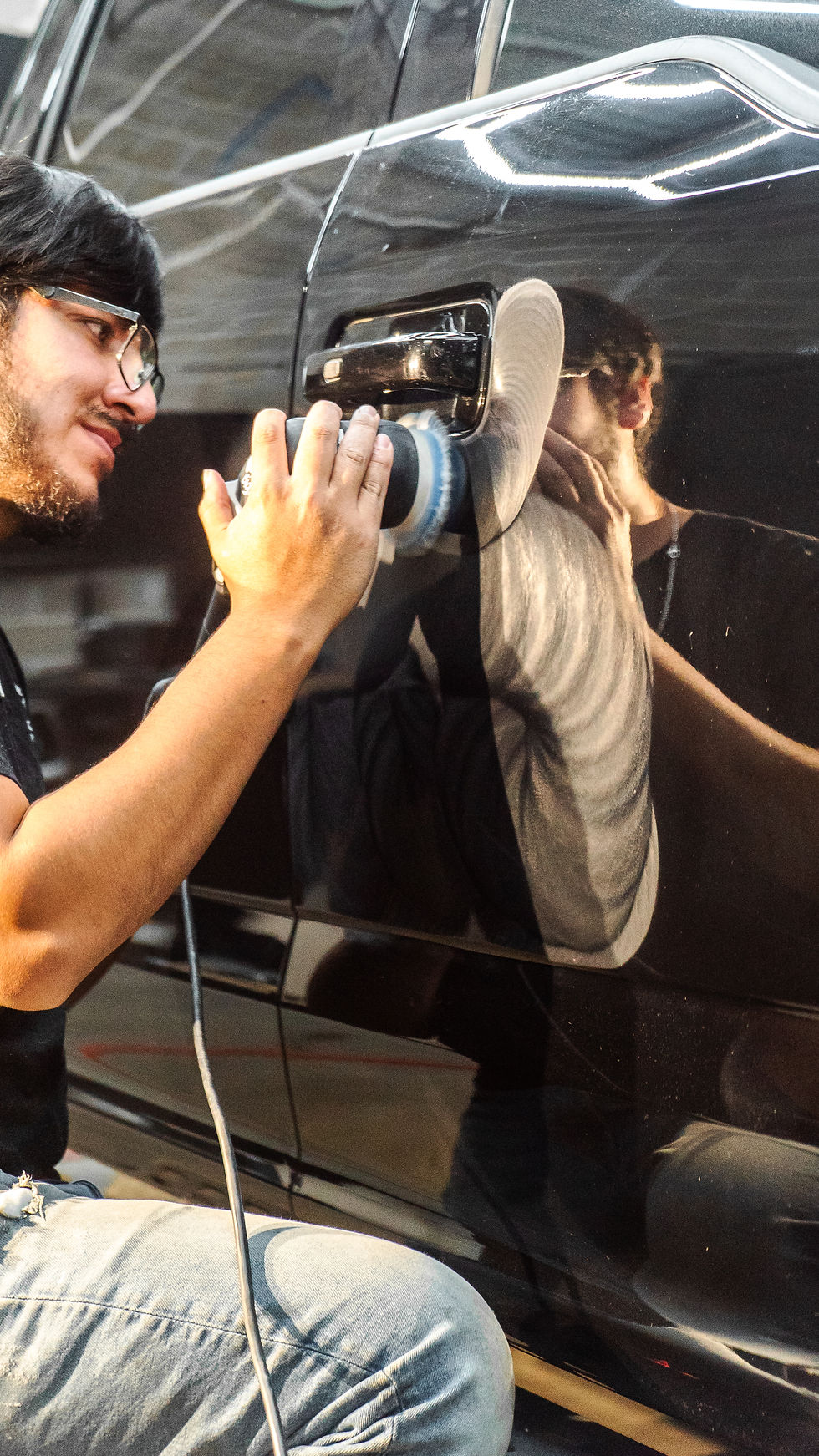
After paint decontamination, your vehicle’s surface is clean but far from perfect. Tiny scratches, swirl marks, and other imperfections often remain, hidden beneath the dirt and grime that have been removed. The next step is crucial: deciding whether to perform a one-stage or multi-stage buffing and polishing process before applying a ceramic coating. This choice affects not only the look of your paint but also how well it will be protected over time.
Understanding what happens after paint decontamination and why paint correction is essential will help you make the best decision for your vehicle’s finish and long-term care.
What Happens After Paint Decontamination?
Paint decontamination removes bonded contaminants like tar, tree sap, iron particles, and industrial fallout that washing alone cannot eliminate. This process leaves the paint surface clean but often reveals imperfections that were previously hidden. These can include:
Fine scratches and swirl marks from washing or environmental exposure
Oxidation or dullness in the paint
Minor etching or water spots
At this stage, the paint looks cleaner but may appear dull or uneven. This is where vehicle paint correction comes in. The goal of paint correction is to restore the paint’s clarity and depth by removing or reducing these imperfections.
One-Stage Buffing: When and Why to Choose It
One-stage buffing involves using a single polishing step with a compound or polish to remove light to moderate imperfections. It’s a quicker, less labor-intensive process that works well if your paint is in relatively good condition.
Benefits of One-Stage Buffing
Time-efficient: Usually completed in a few hours
Cost-effective: Less labor and fewer materials needed
Sufficient for minor defects: Removes light swirl marks, fine scratches, and haze
When to Choose One-Stage Buffing
Your vehicle is a daily driver with minor wear and tear
Paint imperfections are light and not deeply embedded
You want to improve gloss and clarity without extensive correction
You plan to apply a ceramic coating to protect the paint
One-stage buffing prepares the paint surface by smoothing out minor defects, allowing the ceramic coating to bond better and provide effective vehicle protection.
Multi-Stage Buffing: When It’s Worth the Extra Effort
Multi-stage buffing uses several polishing steps, starting with a more aggressive compound and progressing to finer polishes. This process removes deeper scratches, oxidation, and more severe swirl marks, restoring the paint to a near-perfect finish.
Benefits of Multi-Stage Buffing
Deeper correction: Removes more significant defects and imperfections
Enhanced gloss and depth: Paint looks richer and more reflective
Better surface preparation: Ceramic coating bonds to a smoother, cleaner surface
When to Choose Multi-Stage Buffing
Your vehicle has visible scratches, oxidation, or heavy swirl marks
You are a car enthusiast seeking showroom-quality paint finish
You want to maximize the longevity and effectiveness of your ceramic coating
You are willing to invest more time and money for superior results
Multi-stage buffing is ideal for restoring older vehicles or those with neglected paint. It ensures the ceramic coating protects a flawless surface, reducing the chance of future damage and costly repairs.
Why Polish Before Ceramic Coating?
Polishing removes imperfections that can trap dirt and water, which degrade paint over time. If you apply a ceramic coating without correcting the paint, those scratches and swirls remain visible and can worsen. Polishing also creates a smooth surface that allows the ceramic coating to bond more effectively, enhancing durability and shine.
Think of polishing as preparing the canvas before applying a protective layer. Without this step, the coating cannot perform at its best, and you risk paying for correction again sooner than necessary.
How Ceramic Coating Protects Your Vehicle
Ceramic coatings form a hard, transparent layer over the paint that repels water, dirt, and contaminants. This layer:
Reduces the chance of swirl marks and scratches
Makes washing easier and less frequent
Protects against UV damage and oxidation
Enhances gloss and depth of the paint
By combining paint correction with ceramic coating, you get both a stunning finish and long-lasting vehicle protection.
Practical Tips for Choosing the Right Buffing Process
Assess your paint condition: Look closely under good lighting for scratches, swirl marks, and dullness
Consider your budget and time: Multi-stage buffing costs more and takes longer but offers better results
Think about your goals: Daily drivers with minor wear may only need one-stage buffing, while enthusiasts should opt for multi-stage
Consult a professional: Experienced detailers can evaluate your paint and recommend the best approach
Summary
After paint decontamination, polishing your vehicle’s paint is essential to remove scratches and swirls before applying a ceramic coating. One-stage buffing works well for light imperfections and daily drivers, while multi-stage buffing is best for deeper correction and superior finish. Polishing ensures the ceramic coating bonds properly and provides lasting vehicle protection, saving you time and money in the long run.

Comments